

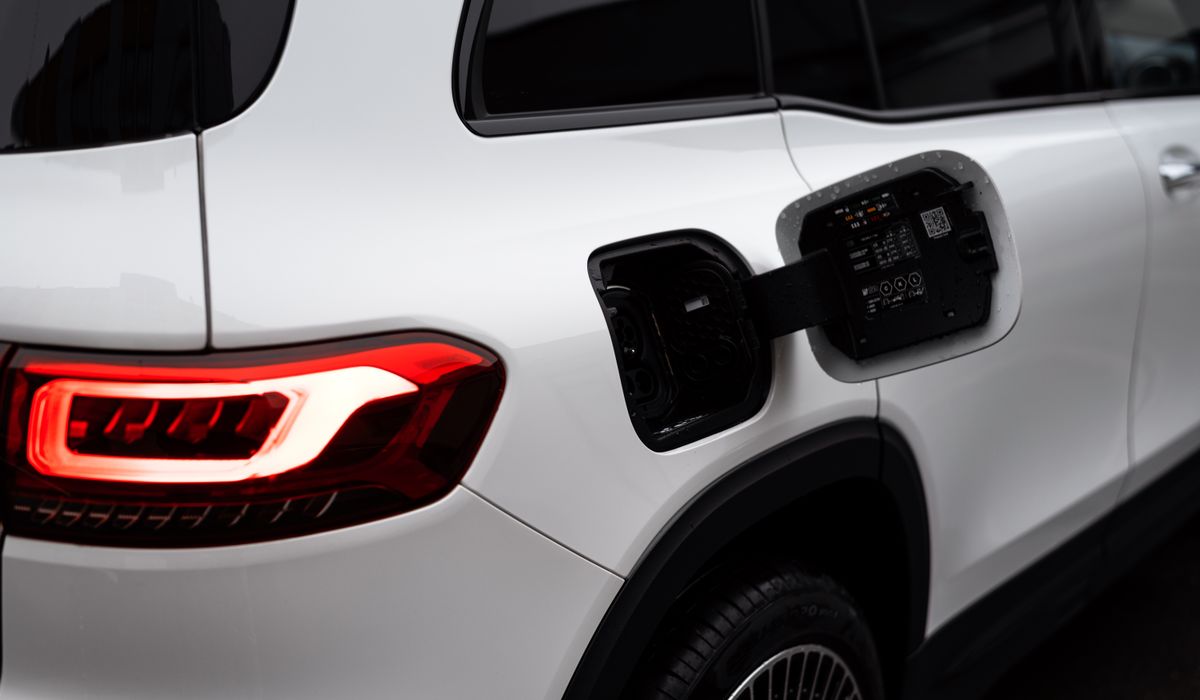
Why Charging Speed Comes Down to Your Day
Anyone who has just taken delivery of their first electric vehicle asks the same question: how long does it take to charge? The honest answer is that it depends — and not only on the car. Charging speed is a conversation between three things: the power the charge point can deliver, the onboard charger fitted to the vehicle, and the cable connecting the two. Understand that triangle and the labels on charging equipment suddenly make sense.
What matters most is not which speed is "best", but which one suits how you actually drive. A driver doing 30 miles a day has very different needs from a sales rep covering three counties, and both are perfectly well served by the right setup.
Slow Charging: The Overnight Workhorse
Slow charging means anything up to roughly 3 kW. In practice, that usually means a domestic three-pin socket, which delivers about 2.3 kW and adds somewhere between six and eight miles of range per hour. Plug in at 7pm and by breakfast you have comfortably covered a typical commute.
- Typical power: 2.3 kW to 3 kW
- Range added: roughly 6 to 10 miles per hour
- Best suited to: plug-in hybrids, low-mileage drivers, visitors topping up
One word of caution. Drawing a steady 10 amps through a domestic socket for eight hours is hard on a circuit that was never designed for it, and we see more heat-damaged sockets than most people realise. As a permanent solution, a dedicated charge point is safer, faster and surprisingly affordable to run.
Fast Charging: The Everyday Favourite
Fast charging covers 7 kW to 22 kW and is what most people picture when they imagine a home charge point. A 7 kW unit adds around 25 to 30 miles of range per hour, so a typical 60 kWh family car goes from empty to full in a single overnight session. Most UK homes have a single-phase supply, which makes 7 kW the realistic ceiling — and for the vast majority of drivers, it is plenty.
Where a property has a three-phase supply, 11 kW and 22 kW units become possible, but only if the car's onboard charger accepts that rate. Plenty of models cap AC charging at 7 kW regardless of what the wall can offer, so it is worth checking the vehicle specification before paying for extra capacity.
- 7 kW — around 25 to 30 miles per hour
- 11 kW — around 35 to 40 miles per hour, three-phase and car permitting
- 22 kW — around 60 to 70 miles per hour, three-phase and car permitting
- Connectors: a Type 2 socket or tethered lead covers almost all AC charging in the UK
Installation quality matters enormously here. Correct cable sizing, dedicated RCD protection, appropriate earthing and, in some cases, notifying the local Distribution Network Operator are all part of doing the job properly rather than just quickly.
Rapid Charging: Miles in Minutes
Rapid and ultra-rapid chargers use direct current and bypass the car's onboard charger entirely, feeding the battery directly. From 50 kW upwards, the experience changes completely: half an hour on a 50 kW unit can add around 100 miles, while a 150 kW charger can put more than 150 miles into a compatible car in roughly 20 minutes.
- 50 kW — a useful top-up on a longer route
- 150 kW — genuine journey-saving speed for cars that support it
- 350 kW — only ever as fast as the vehicle will allow
Two practical caveats. Charging is quickest between roughly 20% and 80% state of charge, and the rate tapers noticeably above that, so chasing a 100% top-up on a rapid charger usually wastes time. Cold weather also slows the process until the battery warms through. These units generally use CCS connectors, with older CHAdeMO plugs still found on some legacy vehicles.
What This Means at Home and on Commercial Premises
Domestically, the sensible starting point is a survey of your supply. We check the main fuse rating, earthing arrangement, available capacity in the consumer unit and the route for the cable before recommending anything. A well-chosen 7 kW unit with smart scheduling — charging overnight on an off-peak tariff — keeps running costs low and avoids overloading the supply when the oven, kettle and tumble dryer are all on.
Commercially, the picture is broader. Workplace and fleet charging often means three-phase distribution, load management across multiple bays, fair allocation of capacity between buildings, and clear signage so staff and visitors know where to park and how to pay. Accessible bays, cable management and a planned maintenance schedule all matter, and the installation needs to be designed around how the site actually operates rather than dropped in as an afterthought.
Choosing the Right Mix
Most drivers find that slow and fast charging at home or at work covers 80 to 90% of their annual mileage, with rapid charging reserved for longer journeys and the occasional busy day. As a rule of thumb, 7 kW suits the majority of homes, 22 kW makes sense where three-phase power and compatible vehicles are already in place, and rapid charging is best treated as a tool for the road rather than the default.
If you are unsure which combination fits your property, your fleet or your daily routine, a short conversation and a proper site assessment will usually save both money and frustration. Get the fundamentals right — supply, protection, cable route and load — and the charging itself becomes the easy part.






John Doe
14 January, 2022Having no content in post should have adverse..
Chauffina Carr
10 April, 2022We use these tests all time! Killer stuff!
Jim Séchen
16 July, 2022Thanks for all the comments, everyone!